
In-Home Math Tutoring vs Online Sessions: Which Option Is Better?
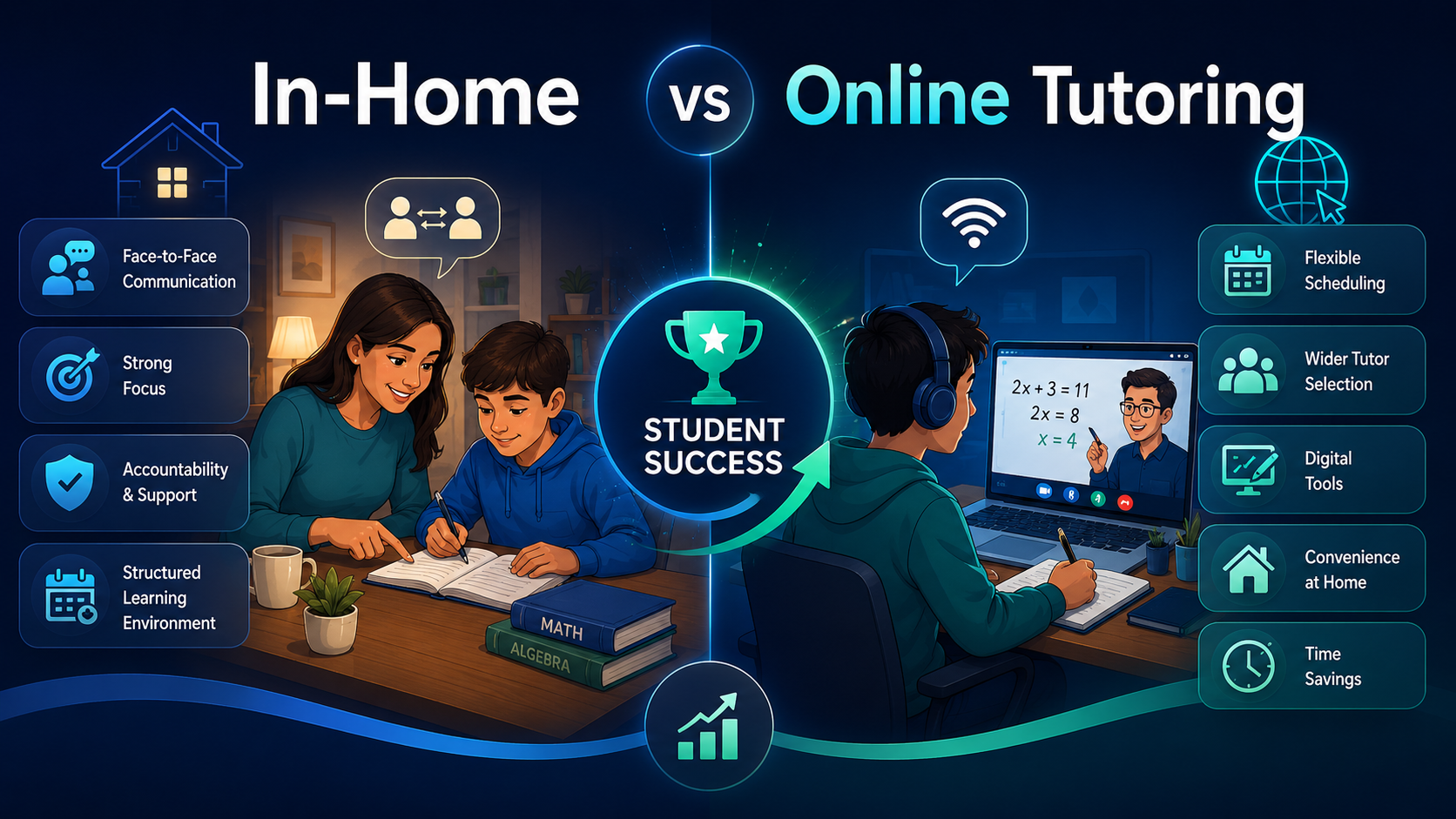
When families start exploring local math tutoring options, one of the first decisions they face is whether to choose in-home tutoring or online sessions. Both approaches have become increasingly popular, and both can help students improve grades, build confidence, and develop stronger math skills.
The question is not whether tutoring works. The real question is which format works best for a particular student.
Some students thrive when sitting across the table from a tutor, while others perform just as well—or even better—through online instruction. Understanding the strengths and limitations of each option can help families choose the learning environment that best supports long-term academic success.
Why Tutoring Format Matters
A tutor’s knowledge and teaching ability are extremely important, but the learning environment also plays a significant role in student outcomes.
The right format can improve:
- Student engagement
- Focus during lessons
- Retention of information
- Communication between student and tutor
- Consistency of attendance
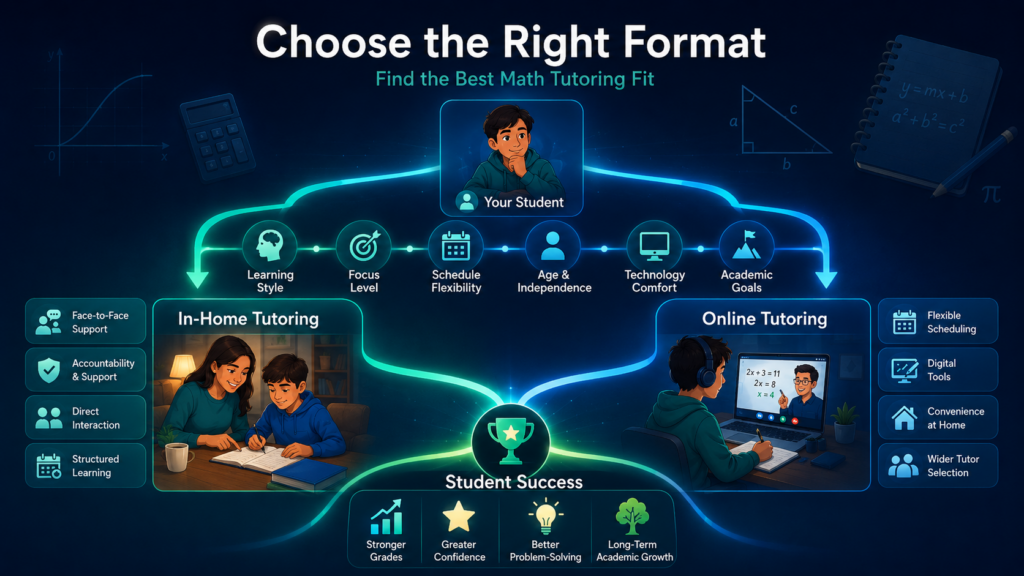
A format that works well for one student may not work as effectively for another. Factors such as age, learning style, schedule, and academic goals all influence which tutoring approach is most effective.
What Is In-Home Math Tutoring?
In-home tutoring involves a tutor meeting with a student face-to-face, typically at the student’s home.
This traditional approach remains popular because it provides direct interaction and a highly personal learning experience.
Benefits of In-Home Math Tutoring
Face-to-Face Communication
Many students respond well to in-person instruction. Tutors can easily observe body language, identify confusion, and adjust explanations in real time.
Fewer Technology Challenges
Online tutoring depends on stable internet connections and functioning devices. In-home tutoring eliminates many of these potential distractions.
Stronger Personal Connection
Building trust and rapport is often easier during in-person sessions. Students may feel more comfortable asking questions and discussing challenges.
Structured Learning Environment
Having a tutor physically present can help some students stay focused and accountable throughout the lesson.
Potential Drawbacks
In-home tutoring may also have some limitations:
- Scheduling can be less flexible
- Tutor availability may be limited to local areas
- Travel time can affect appointment options
- Rescheduling may be more difficult
Despite these challenges, many families still prefer in-home tutoring because of the personal interaction it provides.
What Is Online Math Tutoring?
Online tutoring takes place through video conferencing platforms and digital learning tools.
Over the past several years, virtual tutoring has become a common option for students of all ages.
Benefits of Online Math Tutoring
Greater Flexibility
Online sessions can often be scheduled more easily than in-person appointments.
Students can participate from:
- Home
- School
- College dormitories
- While traveling
Wider Tutor Selection
Families are no longer limited to tutors within a specific geographic area.
This often makes it easier to find specialized help for subjects such as:
- Algebra II
- Geometry
- Trigonometry
- Calculus
- Statistics
Digital Learning Tools
Modern online tutoring platforms often include:
- Interactive whiteboards
- Screen sharing
- Digital note-taking
- Recorded sessions
These tools can enhance the learning experience for many students.
Time Savings
Without travel requirements, students and families often find online tutoring easier to fit into busy schedules.
Potential Drawbacks
Online tutoring may not be ideal for every student.
Common challenges include:
- Internet connectivity issues
- Home distractions
- Screen fatigue
- Reduced face-to-face interaction
Students who struggle to stay focused independently may find online learning more challenging.
Comparing In-Home and Online Math Tutoring
The following table highlights some of the key differences between the two formats.
| Factor | In-Home Tutoring | Online Tutoring |
|---|---|---|
| Face-to-Face Interaction | High | Moderate |
| Scheduling Flexibility | Moderate | High |
| Travel Required | Tutor Travels | None |
| Technology Requirements | Low | High |
| Convenience | Moderate | High |
| Tutor Selection | Local Tutors | Larger Pool |
| Accountability | High | Moderate |
Both formats can produce excellent results when paired with quality instruction.
Which Students Benefit Most from In-Home Tutoring?
In-home tutoring is often particularly effective for certain types of learners.
Elementary School Students
Younger students frequently benefit from direct interaction and hands-on instruction.
Students Who Struggle with Focus
Some students remain more engaged when a tutor is physically present to guide the lesson.
Students with Significant Learning Gaps
Face-to-face instruction can make it easier to identify and address foundational weaknesses before they create larger academic challenges.
Families Seeking Maximum Accountability
Parents often appreciate the structure and consistency that in-home tutoring provides.
Which Students Benefit Most from Online Tutoring?
Online tutoring can be an excellent option for students who value flexibility and independence.
High School Students
Older students are often comfortable using digital learning tools and managing virtual sessions.
College Students
Flexible scheduling makes online tutoring especially convenient for college coursework and exam preparation.
Students with Busy Schedules
Athletics, extracurricular activities, and family commitments can make virtual sessions easier to accommodate.
Self-Motivated Learners
Students who can work independently often perform extremely well in online learning environments.
What Matters More Than the Tutoring Format?
When families compare local math tutoring options, they often focus on whether lessons take place online or in person.
In reality, several other factors tend to have a greater impact on student success.
Tutor Quality
A highly skilled tutor can often produce excellent results regardless of the format.
Consistency
Regular tutoring sessions typically lead to better outcomes than occasional instruction.
Personalization
The most effective tutoring programs adapt lessons to the student’s strengths, weaknesses, learning style, and academic goals.
Student-Tutor Relationship
Students learn best when they feel comfortable asking questions, making mistakes, and actively participating in the learning process.
These factors often matter more than whether lessons occur online or in person.
Finding the Right Math Tutoring Option
The best tutoring format depends on the student’s individual needs.
Some students benefit from the structure and personal interaction of in-home tutoring. Others appreciate the flexibility and convenience of virtual sessions.
Families evaluating tutoring options may also benefit from exploring available math tutors in Las Vegas and comparing the different instructional formats offered by local providers.
Ultimately, the goal is not simply to choose between online and in-home tutoring. The goal is to find a tutoring solution that supports long-term learning, confidence, and academic growth.
Frequently Asked Questions
Is online math tutoring as effective as in-person tutoring?
Yes. Many students achieve excellent results through online tutoring, especially when lessons are personalized and taught by experienced tutors.
How do I choose the best local math tutoring option?
Look for a tutor with experience teaching the relevant subject, strong communication skills, flexible scheduling options, and a personalized approach to instruction.
Is in-home tutoring better for younger students?
Many younger students benefit from face-to-face interaction and increased accountability, making in-home tutoring a strong option.
Can online tutoring help with advanced math subjects?
Absolutely. Online tutoring is commonly used for Algebra, Geometry, Trigonometry, Pre-Calculus, Calculus, and Statistics.
How often should tutoring sessions be scheduled?
Most students benefit from one or two sessions per week, although frequency may increase during exam preparation or when addressing significant learning gaps.
Is online tutoring more affordable than in-home tutoring?
Pricing varies by provider, subject, and level of support. While online tutoring can sometimes be more cost-effective, families should focus on the quality of instruction and overall value rather than cost alone.


